WLRNs Jessica Bakeman speaking with Admiral Brett Giroir. Transcript of an interview posted online at WLRN News, October 23
Listen to the full broadcast (4:30 minutes)
Click to view the full transcript of the interview
From the WLRN Studios at the Miami Herald, I’m Christian DiMattei.
More than half of new HIV infections are happening in just 48 counties on the US, Mainland, plus DC and San Juan Puerto Rico. Seven of those counties are in Florida, and they include Miami-Dade Broward and Palm Beach.
Cutting down on the transmission of HIV in Florida would go a long way toward a Trump administration’s goal of ending the HIV epidemic in the United States by the year 2030.
Federal officials visited Miami earlier this week to learn more about the challenges South Florida faces in fighting the disease.
WLRN’s Jessica Bakeman spoke with Brett Giroir, the Assistant Secretary for Health at the US Department of Health and Human Services. He’s also an admiral in the US Public Health Service and a Pediatrician.
Giroir started by explaining what healthcare providers here are doing right.
We had wonderful site visits this morning to Care Resource, which is a local community health center.
You not only get your HIV tested but you also get your cholesterol tested and your blood pressure because HIV testing shouldn’t be something separate and stigmatizing.
It’s part of normal health care. I get an HIV test every two years —it should be part of routine testing.
Secondly, they’re dealing with the whole person, meaning that if a person has issues with housing or transportation, they’re really working with that because if you don’t have food on the table or place to live, it’s very hard to know how to take care of yourself and take your medicine every day.
And then we also visited Latino Salud. When a person comes in and they’re helping them get to healthcare, they actually send a representative, a counselor, with that new patient to the doctor’s office or to the healthcare facility to help them understand and negotiate what’s going on, you know, that kind of personal attention is just immeasurable in its value.
So we’ve seen incredible people, incredible practices…very informational, very inspiring and you know, we want to disseminate that around the country. There are some great things happening.
So do we know why this is hitting Florida harder?
There were about 38,500 new cases in the US and over almost 6,000 of those were in Florida. So your rates of HIV here are about double the normal rate throughout the country.
And of course, the rates are high, but you also have a large population. So, so many patients are here being diagnosed every year, and we know here around Miami there is a disproportionate burden among people in the LatinX community — particularly Latin men who have sex with men and also transgender women.
And we’re learning about all the stigma and barriers that can get them not into care the way they should be or get tested.
We want to decrease stigma as much as possible because stigma is the enemy of public health, but if it’s impossible to get rid of all the stigma, what are ways that we can work around the stigma to make certain places that are much more accessible, like Latino Salud that we saw today, to provide medications potentially by mail or by specific pharmacy order —that we can help people get the treatment they need.
And the stigma you’re talking about, is it related to religion or other cultural factors?
This is not a moral flaw. This is an infectious disease and we need to deal with it. But I think we see in many parts of the country there’s still a stigma of religion or of culture whether about being a gay or bisexual man or about being transgender, and we’re really trying to break through that. Now we’ve made tremendous progress, and part of this program is to really help educate and embrace many people. We just learned of a sister here who works in an HIV testing program.
Sister meaning a nun?
A sister meaning a nun. I come from a faith-based tradition. I was taught to love everyone because everyone has infinite worth and we’re all the same and I think if we get behind that premise then we’re all going to be fine. But we do want to reach every community and we want to get all the partners we can. Health centers, community organizations, activist organizations, but also the faith-based community.
That was WLRNs Jessica Bakeman speaking with Admiral Brett Giroir, Assistant Secretary for Health at the US Department of Health and Human Services, Giroir and other Federal officials visited Miami earlier this week in hopes of learning more about how to stop new HIV infections in Florida.
This is WLRN News. I’m Christian DiMattei.
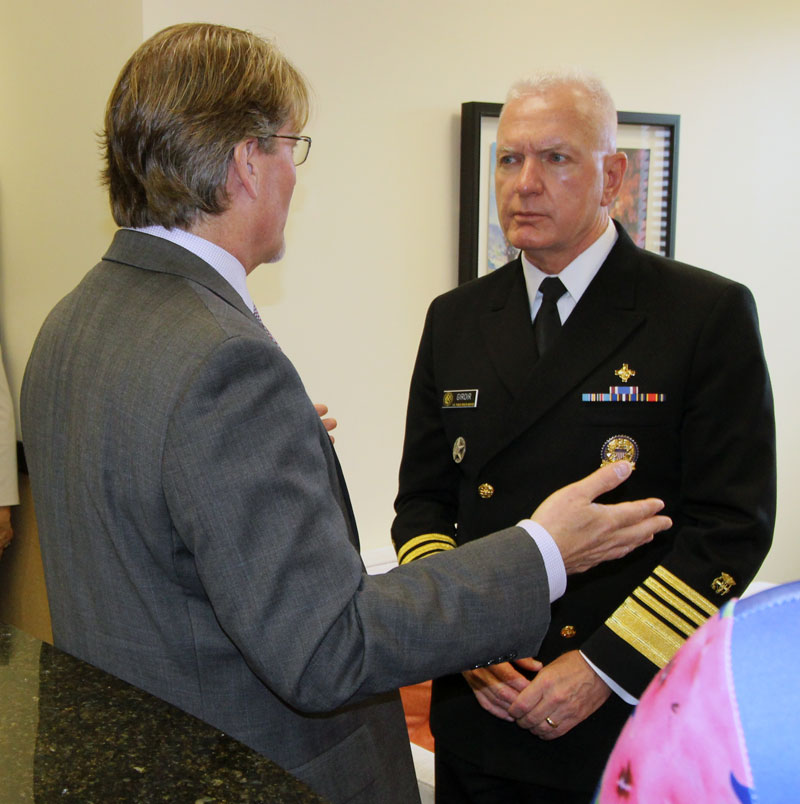
U.S. Department of Health and Human Services Assistant Secretary and Admiral in the U.S. Public Health Service Brett Giroir with Dr. Thomas Smith, Director of Behavioral Health Services at Care Resource.
U.S. Department of Health and Human Services Assistant Secretary and Admiral in the U.S. Public Health Service Brett Giroir with Dr. Thomas Smith, Director of Behavioral Health Services at Care Resource.
Federal health officials visited South Florida to learn about the challenges and opportunities involved in reducing new HIV infections. During their visit, leaders toured community-based healthcare organizations, including Care Resource, to gain insight into successful approaches for HIV testing, treatment, prevention, and patient support.
The visit highlighted the importance of collaboration, innovation, and community-centered care in the ongoing effort to improve HIV prevention in South Florida.
Learning from Effective Community Healthcare Models
Federal officials met with healthcare professionals working directly with individuals affected by HIV. They examined how community health centers and nonprofit organizations are expanding access to care while addressing the unique needs of the populations they serve.
An Integrated Approach to Care
Care Resource was recognized for its integrated approach to healthcare, which combines HIV prevention and treatment services with primary medical care, behavioral health services, case management, and patient support. This model helps reduce barriers to care and improves health outcomes by addressing the needs of the whole person.
Why South Florida Remains a Focus for HIV Prevention
Communities throughout Miami-Dade, Broward, and Palm Beach counties have long been at the center of initiatives aimed at increasing HIV testing, improving access to treatment, and reducing new transmissions.
Public health leaders emphasized that meaningful progress requires continued investment in prevention services, education, community outreach, and early intervention. Strong partnerships between healthcare providers, public health agencies, and community organizations remain essential to achieving these goals.
HIV Testing as Part of Routine Healthcare
One of the key topics discussed during the visit was the importance of normalizing HIV testing as part of routine healthcare. When HIV testing is integrated into regular medical visits, it becomes a standard component of preventive care rather than something viewed separately or through the lens of stigma.
Routine testing helps individuals learn their status earlier and access treatment sooner if needed. Additionally, it supports broader public health efforts by increasing awareness and encouraging conversations about prevention and wellness.
Treating the Whole Person
Federal officials also highlighted the importance of addressing factors beyond medical care that influence health outcomes. Challenges such as housing instability, transportation barriers, food security, and access to supportive services can affect a person’s ability to stay engaged in care and maintain their health.
Care Resource’s whole-person approach recognizes these realities. By connecting patients to supportive services, behavioral healthcare, case management, and medical care, the organization helps individuals overcome barriers that may interfere with treatment and long-term wellness.
Addressing HIV Stigma Through Education and Support
Another major focus of the discussion was the need to reduce HIV-related stigma. Public health leaders noted that stigma can discourage individuals from getting tested, seeking treatment, or accessing available healthcare services.
“Stigma is the enemy of public health.”
Education, outreach, and culturally responsive care help create environments where people feel comfortable seeking services and discussing their health concerns. By replacing misconceptions with accurate information, communities can support more individuals in accessing the care they need.
The Value of Community Partnerships
The visit also reinforced the importance of strong community partnerships. Healthcare providers, nonprofit organizations, advocates, and faith-based groups all contribute to expanding access to HIV prevention and care. These partnerships help connect individuals to services while building trust within the communities they serve.
Patient Navigation Matters
Patient navigation, community outreach, and one-on-one support were highlighted as valuable strategies for helping individuals successfully access healthcare services and remain engaged in care.
Looking Ahead
Reducing new HIV infections requires a shared commitment from healthcare providers, community organizations, public health leaders, and local communities. Through routine HIV testing, comprehensive healthcare services, patient support, and community collaboration, significant progress can continue to be made.
At Care Resource, we remain committed to expanding access to HIV prevention, testing, treatment, and supportive services throughout South Florida. By working together and continuing to address the needs of the whole person, we can help create healthier communities and improve outcomes for individuals affected by HIV.