Health officials are investigating a nationwide increase in cyclosporiasis, an intestinal illness caused by the parasite Cyclospora cayetanensis. Since May 2026, the Centers for Disease Control and Prevention (CDC) has reported more than 1,600 confirmed cases across 34 states.
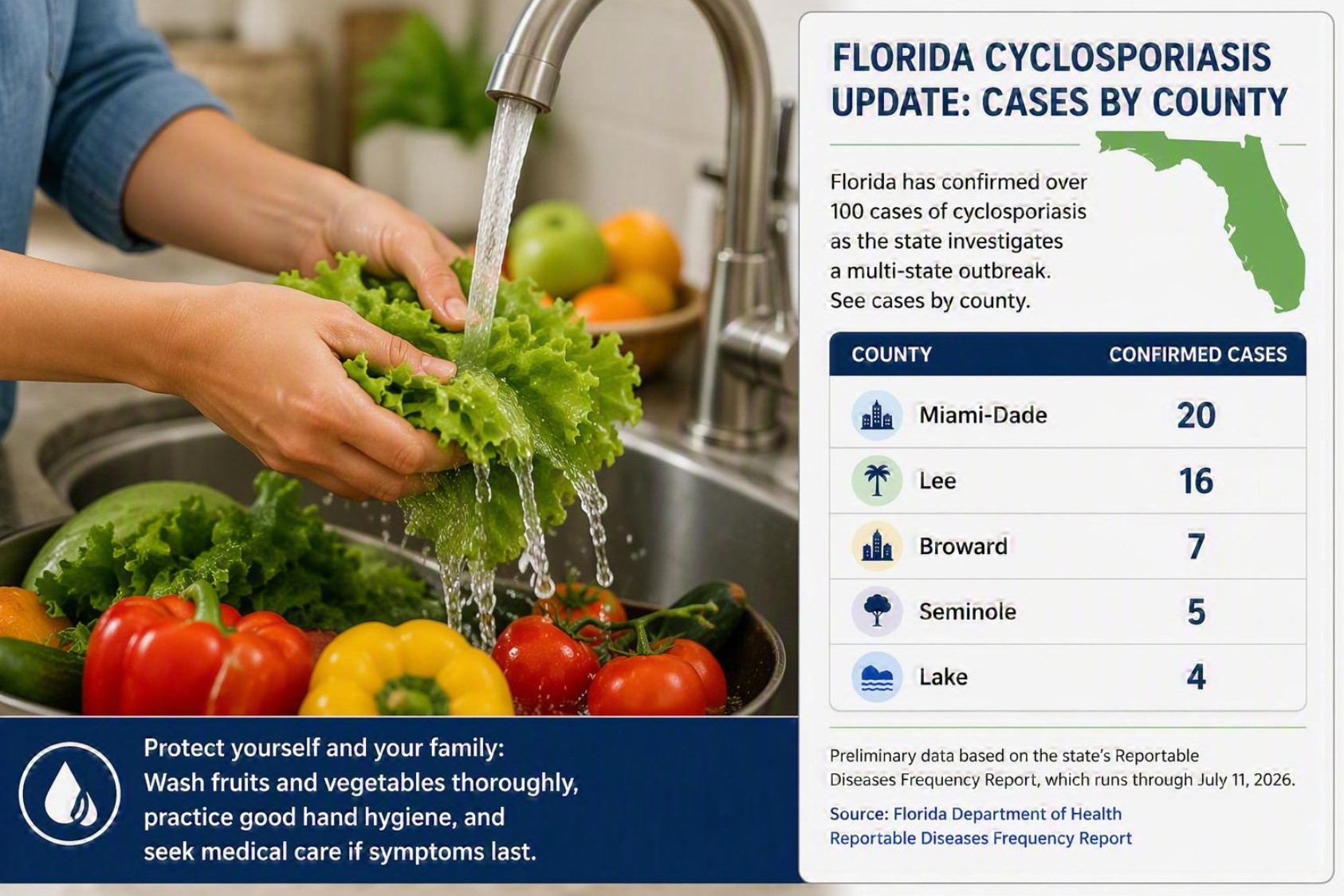
Florida has also seen an increase in cases. According to the Florida Department of Health, Miami-Dade County has the highest number of reported cases in the state, followed by Lee and Broward counties.
While investigators continue working to identify the source of the outbreak, here is what you should know.
What Is Cyclospora?
Cyclospora is a parasite that spreads through contaminated food or water. In the United States, outbreaks have most often been linked to fresh produce, including leafy greens, herbs, and berries. Unlike many stomach illnesses, it usually does not spread directly from person to person.
Symptoms usually begin about one week after exposure and may include:
- Watery diarrhea
- Stomach cramps
- Nausea
- Bloating
- Fatigue
- Loss of appetite or weight loss
Some people also experience low-grade fever, vomiting, or headaches. Symptoms may improve and then return, and without treatment, they can last for several weeks.
Who Is Most at Risk?
Anyone can become infected, but severe illness is more likely in:
- Older adults
- Young children
- People living with HIV
- Organ transplant recipients
- People receiving cancer treatment
- Anyone with a weakened immune system
If you are living with HIV or have a weakened immune system, contact your healthcare provider if you develop persistent diarrhea or other symptoms.
How to Protect Yourself
A few simple steps can help lower your risk:
- Wash fresh fruits and vegetables thoroughly under running water before eating or preparing them, including produce labeled ‘pre-washed’ or ‘ready-to-eat.’
- Wash your hands with soap and water before eating or preparing food and after using the restroom.
- Keep fresh produce separate from raw meat and clean kitchen surfaces regularly.
- Drink plenty of fluids if you develop diarrhea to help prevent dehydration.
When Should You Seek Medical Care?
Contact a healthcare provider if you have:
- Diarrhea lasting more than a few days
- Severe or recurring watery diarrhea
- Signs of dehydration
- Unexplained weight loss
- Symptoms that improve and then return
Cyclospora requires specific testing and is treatable, so getting medical care early can help you recover more quickly.
Care Resource Is Here to Help
The recent increase in cyclospora cases is a reminder that foodborne illnesses can affect anyone. Taking simple precautions, especially washing fresh produce and practicing good hand hygiene, can help reduce your risk.
If you have questions, are experiencing symptoms, or need medical care, Care Resource is here to help. Schedule an appointment online or call 305.576-1234
Note: This article is based on current guidance from the Centers for Disease Control and Prevention (CDC) and the Florida Department of Health. Recommendations may change as the investigation continues.